For most of us living in modern times, Christmas and the holidays are meant to be a happy, cosy and safe affair which, minus the stress, over-drinking/eating, family issues and financial implications are something to look forward to. However, in the dark forests of central and eastern Europe, and in the frigid lands of Scandinavia and Iceland, there is a darker side. Alongside the glittering lights and warm colours lurk monsters, cannibals and witches. The dark creatures waiting to prey on you while you’re weak with cold or lost in the dark or to punish those who have acted wickedly. Dark Christmas and winter folklore is becoming increasingly popular as people seek for something outside the increasingly commercialised holidays and we have selected a few creepy characters to give you a little chill this season! As we found quite a few to tell you about, this blog will be split into two parts, so keep an eye out for part 2!
Krampus: The Anti Santa (Austria and Central Europe)
Probably the most recognisable to most of you as the epitome of dark Christmas folklore is of course Krampus. Thought to originate from central Europe, mostly from German speaking countries, Krampus pre-dates Christianity and the legend of St Nicholas and was originally linked to Norse mythology. He is believed to be the son of the goddess Hel, who is, in turn, the daughter of Loki: god of mischief. Hel was a demi-god who had one half of her body appear as a living woman and the other half as that of a decaying corpse. She ruled over Helheim (also called Hel or Niflheim) and was the goddess of death. She wasn’t an evil figure, more of a custodian of the dead and is often depicted as depressed. Another possible origin for Krampus, is a pagan German folklore figure known as Percht, a two legged humanoid goat with a giraffe-like neck wearing animal furs. They were wild spirits of nature that pagans felt needed appeasing around winter time. Perchtenlaufen were pre-christian processions where people dressed as the Percht figure similar to later Krampusnacht.

Krampus became associated with Christianity during its spread over Europe around the early middle ages. He is made out to be the counterpart of St Nicholas and would punish those children who had been too naughty to receive a gift from the gift-giving saint. In most parts of Europe, the 6th of December is St Nicholas’ Feast Day and, to this day, children leave their shoes by the fireplace the night before in hope of receiving a present from St Nick. If they have been too naughty, Krampus would climb down the chimney instead, put the children in a sack and beat them with birch sticks. Some legends have him then eating the children while others have him dragging the children to hell. Krampus acts as a counterbalance to St Nicholas and reminds people of the duality of human nature. The good and the bad. He also brings a touch of darkness to an otherwise light-filled and joyful Christian holiday. He is evidence of the way Christianity has tried to erase or appropriate the beliefs of other religions that far outdate its own.
Krampus’ name derives from the German word for claw which is ‘Krampen’ and he is often depicted as half goat, half demon with a long lashing tongue. He appears with shaggy, dark fur, one human foot and one goat foot. He has long horns, stands at 8-9ft tall and is often pictured carrying chains. The 5th of December is now known as Krampusnacht in German speaking countries and often great parades known as Krampuslauf (Krampus Run) take place in which people dress as the demon himself and chase spectators or try to scare them. Many imaginative interpretations of his appearance can be found during these events. It is tradition to offer Krampus a glass of schnapps over Krampusnacht, left out in a similar fashion to milk for Santa at Christmas.
In more modern times, the Catholic Church has tried to ban Krampus, deeming him too “Satanic” or scary. However the popularity for the figure has instead grown dramatically and is now international. The resurgence of Krampus is thought to be a response to the overcommercialisation of Christmas and instead takes the festival back to earlier roots. Depictions in the media (such as in recent horror films) has also helped to cement him in the modern mind. In recent years, he has been the star of several episodes of popular television programmes such as American Dad and has had his own horror films such as the 2015 horror comedy Krampus.
Gryla: The Christmas Witch (Iceland)
Gryla comes from Icelandic folklore. She is depicted as a monstrous, troll-like witch who haunts the countryside during the Christmas season. In most stories involving Gryla, she travels from settlement to settlement in the depths of winter, knocking on peoples doors asking for charity. In the event that no charity can be offered, Gryla instead will take the family’s naughtiest child to be eaten. Some stories however skip the charity aspect to have her simply breaking into people’s homes or snatching children from the woods to be eaten. Sometimes Gryla was described devouring children whole, but some stories had her carry them back to her den in the desolate mountains where she would boil them in a cauldron before eating them. Gryla had the power to control the weather and could conjure winter storms, anything associated with the cold and desolate wilds could be associated with her. Some scholars believe that early depictions of Gryla were reflecting the wild winter weather in Iceland and the “swallowing children” aspect was to avoid children wandering too far from settlements where they were instead swallowed by the intense winter storms.

Gryla is first mentioned in The Prose Edda, a thirteenth century record of local folklore written by Snorri Sturloson (sometimes Snorri Snorrison) a thirteenth century Icelandic Skald. However she does not get associated with Christmas until the 17th Century when poems about her become more popular. Originally Gryla is depicted in The Prose Edda as a troll woman, who were not necessarily the trolls depicted today as large, vicious creatures. Trolls in traditional Icelandic and Scandinavian folklore could be both good and bad and could appear very much human. Under later Christianity, trolls became more associated with evil and by the 17th Century, Gryla is depicted as evil.
There are many differing depictions of Grylla, some describe her as a crone (an old woman in a hood with potentially a hooked nose and features described as ugly), to a truly monstrous creature, some depictions include a tail, three hundred heads and goats horns. Gryla was sometimes depicted with a husband and during her revival in the 17th century was made mother of The Yule Lads, mischievous gnome-like characters, who I will cover below. She is also said to have a pet known as Jolakotturinn or The Yule Cat, who I will, again, cover below. Gryla’s husband is named as Leppalúði (Lay-Pah-Loo-Thee), a lazy and oafish troll who barely ever leaves their cave.
There was a haunting painting of Gryla produced in Iceland in 1978 by Þrándur Þórarinsson that gained fame outside of Iceland via the internet in 2009 portraying a parent opening the door of their children’s room, illuminating the gaunt, pale figure of Gryla feasting graphically on a small child. Gryla has gained popularity more recently outside of Iceland, appearing on screen in 2024’s Christmas Netflix special Red One and as a recurring character in the recent Chilling Adventures of Sabrina.
The Yule Cat: Jólakötturinn. (Iceland)
The Yule Cat (known as Jolakotturinn (Yola-kott-errin) in its original Icelandic) is a monstrous cat, at least 12 feet in height and described as “taller than a house,” that would stalk the snowy forests of Iceland in the winter. Traditionally, the Yule Cat would hunt down children who weren’t wearing new clothes for the winter and devour them. This was a cautionary tale on three fronts. Children would feel a healthy fear of the forests in winter and would be grateful for new clothing. Parents would be encouraged to ensure their children were properly clothed and farmers were encouraged to bring in their wool production before the winter to ensure the clothes were made as they would receive new clothes for their work. Those that didn’t finish in time would not, and so would be prey for the Yule Cat.

The first definitive mention of the Yule Cat is in 1862 as part of a series of poems written by Jon Arnuson but it could go back many centuries further through oral traditions. The cat became popularised in 1932 when Jóhannes úr Kötlum wrote Jolin Koma (Christmas is Coming), a series of poems based around Christmas folklore. It is possible that the Yule Cat was made up because Arnuson in 1862 took the Icelandic phrase “to dress a cat”, which is believed to mean someone who can’t change (as cats never change their ‘clothes’ AKA fur…) and decided to take a literal meaning and create a monster from it. The Yule Cat was described in later poems as the “pet of Gryla”, linking it to the witch mentioned above. It is also suggested that the Yule Cat was originally one of St Nicholas’ entourage that followed him around Christmas in the Catholic faith, such as Krampus.
Monstrous cats appear in many countries where the Scandinavians settled. Iceland, Norway, Scotland, Ireland, Sweden, Finland and Denmark all have these cats in their folklore but none of them were associated with Christmas. In the 1970s in Iceland, people would make decorative Yule Cat models for their trees made from cardboard or straw and in Reykjavik in 2019, the city council worked with a local garden centre to create a 5 metre tall light-up sculpture of the Yule Cat that stood in the city’s main square over the Christmas period. Some traditional costumes for winter parades (similar to the Krampus Marches) portrayed monstrous cats and it’s possible this is yet another origin of the Yule Cat.
The Yule Lads (Iceland)
The Yule Lads were thirteen gnome or dwarf-like figures that were the children of Gryla the Christmas WItch in Icelandic folklore. They were said to appear from the eve of the 12th of December and onwards over the next 12 nights following (13 in total) and traditionally either left gifts or, in earlier versions, played nasty tricks on people. Each Yule Lad had a name that linked with their personality or habits and these range from the funny, to the unpleasant, to the truly bizarre. The names are cemented for the first time in a poem written by Jóhannes úr Kötlum in 1932 but some are previously mentioned in the 19th Century.

The following are the names and personalities of the Yule Lads:
- December 12, Stekkjastaur (Sheep-Cote-Clod) Described as having two wooden legs and would “suck the milk from your sheep”. Sheep farmers would guard their sheep on this night from him!
- December 13, Giljagaur (Gully-Gawk) Believed to hide in barns and steal the froth from the tops of milk buckets. (Apparently these Lads are milk obsessed…)
- December 14, Stufur (Stubby) Known for being unusually short, Stubby is said to break into kitchens to steal pie tins to eat the leftover crust around the outside.
- December 15, Þvörusleikir (Spoon Licker) A tall, skinny lad, Spoon Licker breaks into people’s homes to lick all of the mixing spoons in the kitchen. (ew)
- December 16, Pottaskefill (Pot Licker) Would break into people’s homes to steal any leftovers in the kitchen pots. On this night, Icelanders would try to lock up leftover stews!
- December 17, Askasleikir (Bowl Licker) What’s with all the licking? Bowl Licker would hide under people’s beds to steal their Askur (traditionally Icelanders had a single wooden bowl with a hinged lid that they ate all their meals from and was kept under the bed).
- December 18, Hurðaskellir (Door Slammer) Door Slammer would hide in the house until the occupants were in bed and then go around loudly slamming all the doors to wake them up.
- December 19, Skyrgámur (Skyr Gobbler) Skyr is an Icelandic yogurt (often made with sheep’s milk) that this Lad is obsessed with. If you didn’t lock up your Skyr supplies, then Skyrgámur would gobble it all up.
- December 20, Bjúgnakrækir (Sausage Swiper) This Lad was said to hide in the rafters of the farms smoke houses (where sausages were smoked over winter) to steal the sausages from the smoking racks at night!
- December 21, Gluggagægir (Window Peeper) Definitely the creepiest of the lot, Window Peeper likes to hide outside your windows at night and peek through them to look for things to steal. Some Icelandic children might tell you that you see glimpses of his pale, bearded face disappearing from the windows in the corner of your eye…
- December 22, Gáttaþefur (Doorway Sniffer) With his eerily long nose and great sense of smell, Doorway Sniffer creeps around your house, shoving his nose around doorways searching for his favourite Laufabrauð (a beautiful thin bread eaten in Iceland at Christmas). Traditionally it is intricately shaped and decorated to appear like a snowflake or leaf and fried until crispy.
- December 23, Ketkrókur (Meat Hook) As terrifying as his name sounds, Meat Hook isn’t there to hurt you, instead he hides on your roof and uses a long hook to steal meat smoking above the fireplace from the chimney above.
- December 24, Kertasníkir (Candle Stealer) The final Yule Lad, Candle Stealer used to follow children around the house if they got out of bed at night to steal their candles (the method with which those children would be lighting their environment), not only to leave them in darkness but to also eat the candles (which at the time were made of ‘Tallow’ or animal fat).
In some depictions, the Yule Lads also act as a group of santas. More modern interpretations and traditions see children leave their shoes by a window from the eve of the 12th until the eve of the 24th. Each night, if the child has been good, a different Yule Lad pops a small gift in the shoe until there is one from all 13! Some versions say that naughty children would instead receive a rotting potato in their shoe. They are generally depicted as small and pot-bellied with white beards and colourful pointed hats. They could easily be mistaken for the garden gnomes we get in this country but earlier depictions of them are more sinister. The original Yule Lads, as described in the 17th Century, were lumbering trolls rather than gnome-like and were incredibly violent, coming down from the mountains to rip naughty children from their beds at night, drag them through the windows and eat them. As time went on and, as they became more associated with Christmas, they were depicted more mischievous than violent. More modern takes make them kind to children and benevolent!
The Yule Lads were effectively used in the 17th and 18th centuries to scare children into following the rules but so many children were becoming traumatised that in 1746, the Icelandic government had to put a rule in place to stop parents from using the Lads to scare their children!
Nisse: The Christmas Gnome (Norway)
The Nisse (pronounced “Nee-Sa”) is a Norwegian myth of a small humanoid gnome-like figure that likes to hang around farms. When winter is at its most ferocious they are said to help farmers with the chores around the farm so long as they are paid with bowls of porridge with melted butter on top. If they don’t receive their tribute, they instead will sabotage the farmers’ work and can be quite vicious!
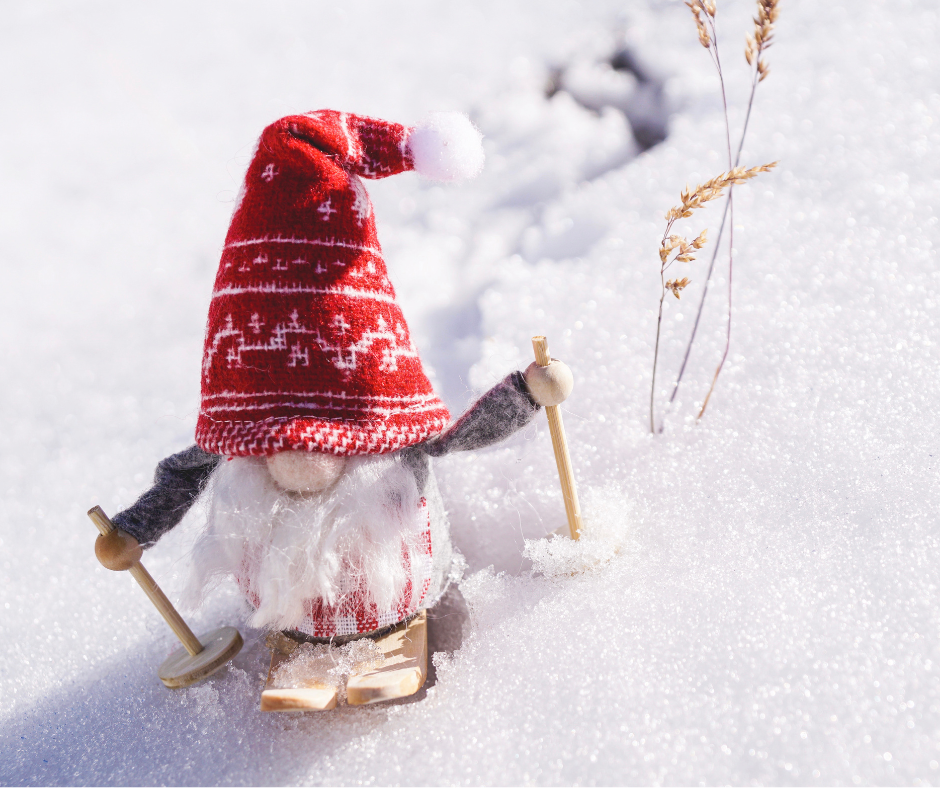
The name Nisse and its origins are a matter of debate among scholars. Christian scholars say that it comes from “Nils” the Norwegian name for St Nicholas, but others attribute it to the old Norse word “niðs” which means “dear little relative”. In Swedish they are called Tomte. A “Tomt” in old Scandinavian is a plot of land and a “Tomte” is a spirit associated with that land as a form of guardian. This has led some scholars to believe that the myth came about from pre-Christian beliefs of ancestor worship mostly found in rural areas. A farmer was often buried on his land under a small mound and, before Christianity banned the practice, relatives would place offerings of food and drink on the mound during festivals such as those around the Winter Solstice so their spirit would, in turn, protect the farm. The modern image of Nisse however is what the British would refer to as a gnome.
They are often described as short, only a couple of feet tall, with a long snowy beard and a red pointed hat. He wears a light blue or brown apron or jacket. A Nisse is said to protect the animals and people on the farm from evil and was said to be seen brushing the animals in their stalls during winter and some farmers would tell of going out in the morning to feed the animals only to find their troughs miraculously filled. (although this might have something to do with the heavy consumption of schnapps to stave off the winter cold). Nisse were said to turn invisible at will, and would always be keeping an eye on the farm and those in it. As a result, if you caught a glimpse of the Nisse, you were deemed fortunate indeed! There are stories around farms in Norway of seeing a small red hatted creature darting off into the forests.
Around Christmas time, Norwegian farm owners tend to decorate their farms with little wooden or knitted effigies of the Nisse that are known in Britain today as gonks!
Nisse typically, although mostly helpful, did have a mischievous side and you certainly don’t want to be on the wrong side of one. In one traditional Norwegian tale, a young girl left the Christmas porridge offering out for the Nisse but put the melted butter beneath the porridge rather than on top. Not seeing the butter on it, the Nisse became enraged and went out and killed the family’s prize cow. He then came back to eat the porridge, only to discover the butter at the bottom. Filled with remorse at what he had done, the Nisse ran over to a neighbouring farm to steal their prize cow and replace the one he had killed! (I wonder if this was an excuse for cow stealing between farmers back in the day?)
Christianity tried to stamp out the belief of the Nisse, believing it to be pagan and satanic but, like with most rural traditions, they found it very difficult to control and thankfully the practice carries on today! Many Norwegians famously believe in elves and spirits today, referring to them as “huldufólk” or “hidden folk.” In some cases in times gone by, farmers in Norway, jealous of a neighbour’s more successful crops, would claim to the church that they were in league with a Nisse and its “ungodly work” and that neighbour might then be punished by the clergy!
I hope you’ve enjoyed that alternative festive reading and don’t have nightmares! Watch out for Part 2 folks coming soon!