The 19th Century was an interesting time for medicine in the UK. We went from practically medieval practices as of 1800CE, to what would closely resemble today’s medicine by 1900. That’s a big change in only 100 years, only really a couple of generations. So what was original late Georgian/early Victorian medicine like, and how did it change so drastically? Hopefully this blog will answer a couple of those questions, but beware, some of the content may not be for the faint of heart as this is famously a messy subject!
Late Georgian and Early Victorian Practices
If you were seeking medical help at the end of the 1700s into the beginning of the 1800s, you would have limited choices depending on your social status and class. Aristocracy and the richer families would usually have access to a Physician, the elite, university trained, rich gentlemen of the medical world who would have thoroughly studied Latin, medicine and Greek. They were usually diagnosticians, and would not often be engaged in manual labour such as you would see with a surgeon. Instead they would recommend medicines and other “healing techniques” that were thought of as appropriate at the time (although compared to modern medicine some were laughable, such as the idea that you could cure Tuberculosis simply through exposure to fresh air and sunlight).
As a middle class person you would have your pick of surgeons and apothecaries. These ranged from poor quality to better depending on the training and the area, but both were seen as labourers and so were on a lower rung on the social ladder to Physicians. Surgeons were the physical doctors, performing operations, tooth extractions, blood-letting and other grisly tasks whereas an apothecary was closer to our modern pharmacies, distributing medicine and advice. Unfortunately a lot of apothecary work could be based on old medical beliefs and practices including herblore, some were more effective than others as a heavy amount of superstition was still followed as of the beginning of the 19th century. One such example is the idea that your mental well-being was controlled through the humours, four bodily fluids that had to be kept in balance: blood, phlegm, black bile and yellow bile. If, for example, you were suffering from what modern medicine would call depression (melancholy or “The Morbs” to the Victorians), it might be that have too much red blood in your body, as such you would visit a surgeon who would make a cut and drain some of your blood. You may have heard about this if you’ve been on our Tavern Trail Tour! Obviously to a modern medical practitioner, this is a ridiculous notion but was, by the 1800s, an idea that had been practiced for over 2000 years.
If you were at the bottom of the economic, or social ladder, your options were slim. Most rural people usually had access to apothecaries or healers but their actual usefulness as a medical practitioner were questionable. Travelling and urban quacks would also make things more difficult as they made money from giving fake advice or selling fake medicines that usually didn’t do anything practical medically or even resulted in a patient’s death. Sometimes the woman of the house would have a “medicine chest” that was filled with the most basic remedies to avoid seeking expensive medical help elsewhere.
In terms of some of the more bizarre medicines of the time, Opium (the forerunner to heroin) was given to patients as a general cure for pain, coughs, nausea or if a baby was fussing! Deaths among babies from an overdose of Opium were commonplace. Cocaine was used as a stimulant and pain reliever. If you were suffering from toothache you would take “cocaine drops”. Arsenic, the poison, was prescribed for skin conditions and anaemia and Mercury would be prescribed to help with Syphilis and digestive issues despite being completely toxic and resulting in tooth loss and worse. Chloroform was used to treat coughs, Tobacco and Cannabis for asthma, and if you were unlucky enough to be suffering from a mental health condition, you might be forced into electrotherapy, during which the patient would be subject to bursts of powerful electricity through nodes attached to each side of the head. The damage to the brain caused the subject to enter a “zombie like” state that the Victorians saw as “calming”.

When it came to surgeries, even small procedures could be life threatening. Anaesthetic was largely unknown and so alcohol and other rudimentory narcotics were used to try and keep a patient calm and still. Obviously this had a limited effect on pain and so a wooden stick, or leather strap were given to a patient to bite down on while the surgeon cut into them. Dying from the pain or shock of a surgery was a common occurrence. Alongside this, we didn’t yet have the knowledge of infection. Tools, surfaces, clothes and the hands of the Surgeon went unwashed from previous surgeries and it was a badge of honour to have an apron splashed with bodily fluids. Patients believed the stains marked the experience of an individual Surgeon and the more stains there were, the better the Surgeon.
Statistically, things were pretty awful in terms of life expectancy as well. Roughly one in three children made it to their 5th birthday by the early 19th century. Sadly this could account for one of the reasons so many people had large numbers of children. Only a few would ever see adulthood. The life expectancy of men was around 40 years old, and 42 for women.
What changed?
As mentioned in the introduction, great changes took place to medicine in the 19th century, leading to what would be recognisable as modern medicine today. But what happened to advance medicine so much in such a short amount of time? Well it was to do with the way society in Britain was changing as a whole with the Industrial Revolution. The rural areas of Britain were emptying as jobs were lost to new farming equipment and methods. As a result most people were heading to cities to find jobs in the new factories that were springing up all over. Populations in cities exploded as a result. Norwich went from 38,000 people at the end of the 1700s to over 60,000 by the 1850s. In comparison, Glasgow and Bradford saw a population increase of eight times their previous population.
Although this led to an increase in the country’s wealth, due to the new mass production of products, the gap between the rich and poor only grew and with no room and no investment into building extensive housing for the new workers, slums started to spring up all over urban Britain. With these densely populated and badly constructed areas having next to no water or sanitation, it led to filth building up which of course led to disease. Some of these diseases, such a Cholera, would rip through entire working communities and the death tolls could be extensive. Thankfully, the Victorians were fans of keeping extensive records and statistics which brought the reality of the horrors being faced by the working people to the front doorstep of the wealthy. As a result, Parliament agreed to look at amending the poor laws in 1832 after Sir Edwin Chadwick (a Utilitarian philosopher and reformer), officially established the links between poverty and disease. This led to reforms that, by 1848, resulted in the Public Health Act which set up local health boards to investigate sanitation nationwide and established a General Board of Health. Finally, the plight of the working people and their constant exposure to deadly, infectious diseases was starting to be taken seriously.
Further breakthroughs in medicine came about after an enormous Cholera outbreak in London in 1854. John Snow, a Physician and noted forefather in Epidemiology, the study of disease, was able to map cases across Soho in London and noted that they all seemed to stem from a single well. After the pump handle was removed, the cases seemed to drop, proving that Cholera was waterborne. He also worked out that people who bought water from companies further down the Thames where there was a higher concentration of sewage in the water, compared to those buying water further upriver were suffering a death rate 14 times higher. He also noted that boiling water appeared to make it safer.
By 1876, there was the construction of a state system of medicine following the year before when The 1875 Public Health Act comprehensively encompassed housing, sewage and drainage, water supply and contagious diseases and provided Britain with the most extensive public health system in the world. All sewage had to pass through proper sewers that led to treatment plants and ran underground to minimise contact with the public. Water sources that were used for drinking also had to be cleaned and made safe for consumption.
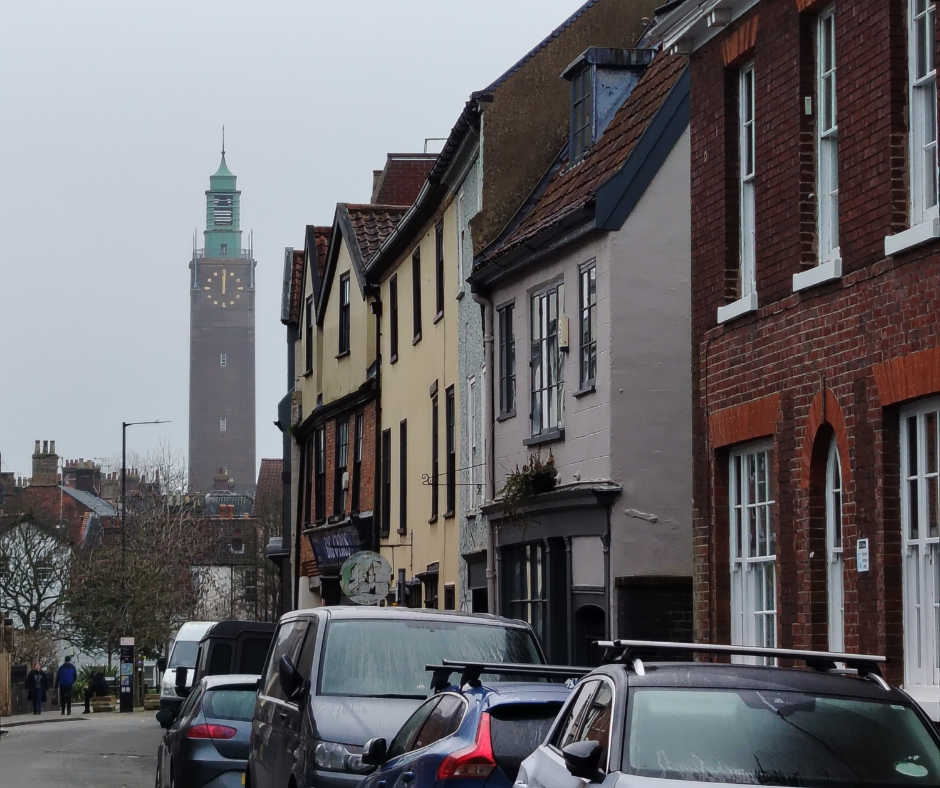
By the 1850s, medical schools were appearing around the country which allowed for proper medicinal training and a wealthy elite of new, scientific and successful Doctors and Surgeons arose in the country. Here in Norwich, they were mostly housed around St Giles leading to its nickname, The Harley Street of Norwich.

Although women were still banned from practicing medicine, the role of nursing was given a popularity boost in the 1850s thanks to the efforts of Florence Nightingale during the Crimean War. She became revolutionary in pushing for hospital reform and sanitation. Thanks to her work, nursing became seen as a noble profession for a woman and many middle class women saw it as a potential avenue to contemplate as an actual career. Also notable of course was Norfolk’s own, Edith Cavell, who (although her medical career is slightly later and into the 20th century) is notable as a hero for her actions as a nurse.
What medical discoveries were made by the Victorians?
A number of the major medical technologies and the medical knowledge we use today were mostly established in Britain over the late 18th century and throughout the 19th century. Each one opened doors for others and this helped massively with the acceleration of medical development.
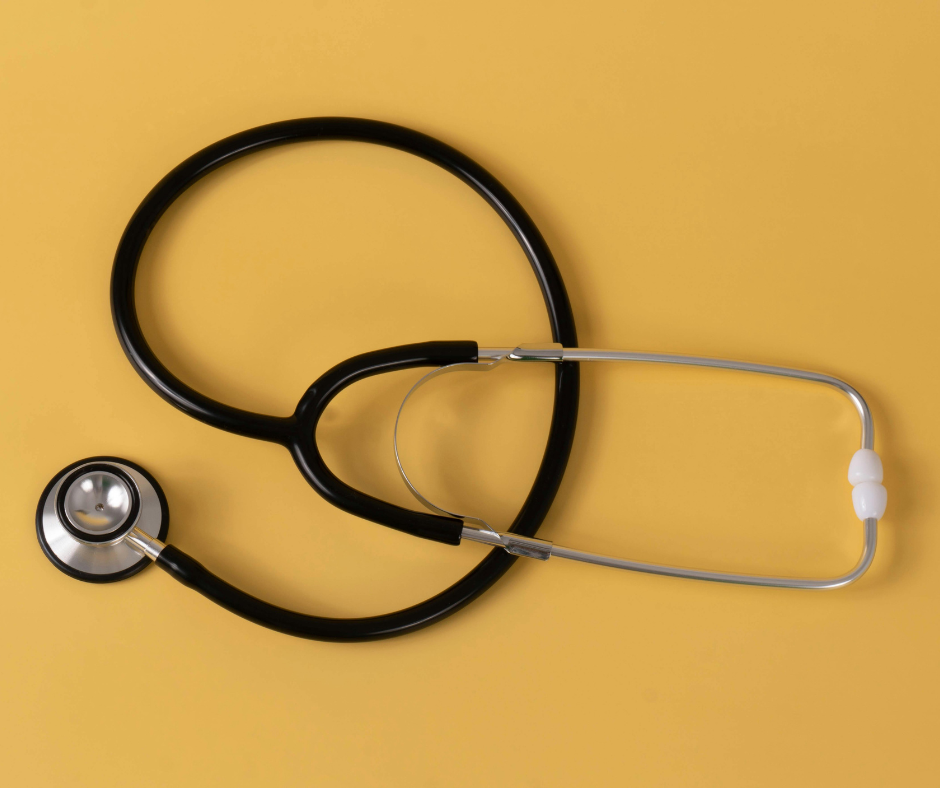
The stethoscope was invented in 1817 and became widely used among medical practitioners, giving them an insight into heart activity without surgery. Microscope technology also greatly improved to allow the study of microorganisms. This allowed Louis Pasteur, in 1850, to prove his “germ theory” by establishing that living organisms were responsible for souring milk (hence the start of pasteurising milk, which he lent his name to) and this led to the introduction of antiseptic medicines to stop infections in medicine and also allowed surgeries to have a higher success rate. By the late 1840s, anaesthesia had developed to allow surgeries to be more successful and less distressing to the patients and went from the use of Ether to Chloroform. This led to Surgeons being able to take more time with surgeries and allowed for further discoveries about human anatomy thanks to the fact that living bodies could be studied (as opposed to cadavers) and there was no fear of the patient being in pain during that process.
In 1882, the discovery of the organism causing TB allowed for vaccines to be produced and the tropical diseases being found amongst soldiers and other people in the Empire who had been to foreign lands led to the discovery that Malaria was carried by Mosquitos which helped to cut down cases when measures were then taken. In 1895, the X-Ray was invented in Germany and quickly became used in medicine by the following year which also greatly advanced medical procedure and diagnosis.
Psychiatry became a more common practice (although it was still markedly controversial), with the study of the human mind meaning that the (still horrendous) mental hospitals could actually start to study conditions of the mind rather than just locking away those poor souls suffering from them out of sight. Poor treatment of those considered mentally ill would continue to plague Britain, however, into the 1980s and is even still seen today.
In Conclusion
So, in conclusion, a lot happened in the 19th century to bring us to where we are today medically. I think many of us can be glad that these changes occured and especially with the creation of the NHS in the middle of the 20th century, something which we can definitely attribute to better, longer and healthier lifestyles today. Before that, medicine (and our understanding of medical conditions) was more likely to cause harm than good and we would all be far more intimately familiar with death as a society.