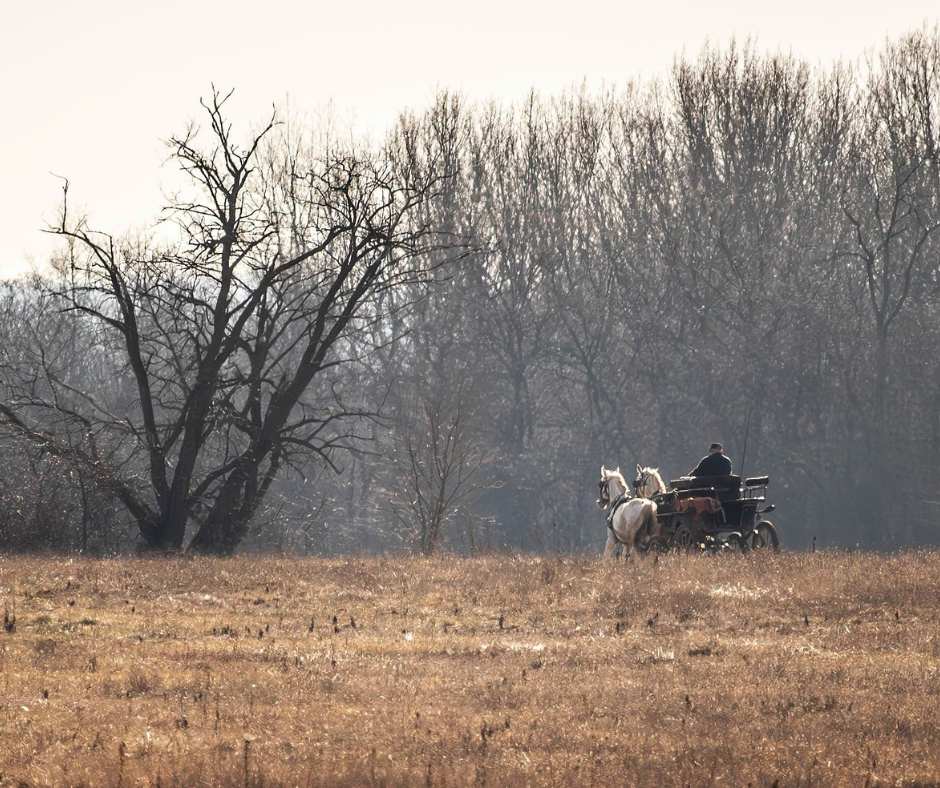
The road from London to Norwich, today the A140, in the 17th and 18th centuries was a dangerous one. Many a traveller would be navigating the long, empty, rural roads and could go a day without seeing another person. However they would all be on the lookout for one kind of person in particular. The infamous Highwaymen or Highway Robbers. Sudden horsehooves from the woods would be heard around the carriage and then the sight of the inside of a gun barrel, accompanied by the now famous line, “Stand and Deliver, your money or your life!”
Who were the Highwaymen?
Before the days of proper established policing there were parish constables. They had evolved from commoner or peasant classes that needed to pay a tithe (a tax made up of whatever product the village produced, usually grain) and the constable was the person in the village chosen to take charge of that payment and act as the person to deliver it. Likewise, if someone was summoned before the lord, they were to bring them before the court. If they failed, the whole village would face punishment. They were not trained, paid or full time in their position, and their jurisdiction ended outside the parish boundaries. As such, they did not make up an effective police presence.
The coaching roads established during the civil war in the 17th century between major cities and places of commerce were outside the realm of law enforcement and often had few areas of population density as the urban sprawl of the Industrial Revolution had not fully started. Coaching inns and other stop off points did offer some refuge, but often they were nests for highway robbers who would be paying off the owner, or making them comply through threats so they could know which potential victims were travelling through the area. East Anglia in particular was isolated and far from the slightly more sophisticated law enforcement of London. It was also wealthy, with a booming weaving industry and ports to mainland Europe. It was attractive to businesses and wealthy classes in London and as such the coaching route was vital. It was also the perfect target for anyone looking to rob all of that vulnerable money. The truly wealthy could afford an armed escort to accompany their coach, but most had to settle for a driver with a firearm and their own flintlock pistols. The 4th Earl of Orford, Horace Walpole once wrote, “One is forced to travel, even at noon, as if one was going to battle.”
Highwaymen are often depicted in the media as roguish, charming, Robin-Hoodesque figures who would disarm their quarry with quick wits rather than at the end of a weapon and, on occasion, we have evidence that that could be the case. Most highwaymen, however, were brutal, violent and would not let anything stand between them and their prize. They were usually poor and desperate. Made to sit in cold timber and plaster housing in mud fields with barely any possessions, giving most of their meagre earnings from fieldwork to those in grand mansions and watching the fancy coaches with their coffers loaded with money, goods and other valuables moving lazily along, perfectly within reach. It was inevitable that the cold and hunger would harden the heart to the person or people riding with that money. Some would stop the coach and simply threaten the occupants in order to gain the money, others knew that it was easier to rob the dead.
Even the robbers were divided into two classes. If the robber was on foot, they were labelled a “footpad,” if they had a horse, they were a highwayman. A footpad was often part of a gang and robberies would be conducted as such using ambush mob tactics but highwaymen were usually alone or in pairs and, being able to afford a horse, were generally seen as slightly higher on the social ladder. A large number of highwaymen in the late 17th century were actually disbanded soldiers from the Civil War, who had been left with military training, trauma and little money. A potent mix. Many had also kept their weapons, uniform and armour and this too aided in putting their skills to good use in order to rob the vulnerable coaches. They were also hardened to killing as well and having faced the heat of battle, often paid no mind to the prospect of hanging from the gallows if they were caught.
Highway robbery declined after a number of factors. The Inclosure Act of 1773 enabled farmers to enclose their fields in stone walls or fencing and restricted common access, effectively laying a net of barriers across a landscape that previously could be ridden across freely. Mounted police forces became more common around London and would often patrol the areas around the outside of the city, forcing the highwaymen to operate further afield. Urbanization began to see the countryside shrink, and the isolated routes travelled better and more frequently. Toll gates and turnpikes meant escape routes were monitored and better firearms such as the pepper box and percussion pistols became more readily available to average citizens, leading to potential victims being better armed. All of this combined with changes in law meant that the highwayman was practically extinct by the early 19th century.
So now you have a background on the world of highwaymen, I’m sure you’re curious. Who were these enigmatic and sometimes bloodthirsty people? How prevalent were they in East Anglia? Well, thankfully records of these characters do still exist and, as such, we have selected a few for you to read about to get to know them a bit better!
The Highwaymen of East Anglia
James Steggles of Barrow, Suffolk
On the evening of the 6th of January, 1783, Mr Macro of Barrow Hall was facing the bitter cold of the road from the Red Lion Inn on the south east of the village of Barrow in Suffolk after collecting the village tithe. He was headed to his home near the school and it was quiet, with most people having locked themselves in their homes to guard against the freezing wind. As he approached his house, he heard sudden, explosive horsehooves and turned to see a dark, masked figure approaching him with a pistol aimed directly at his chest. The masked man demanded he hand over the money, or be shot dead, there in the street. Surprised and panicked, Mr Macro obliged and handed over the large bag of money. However, as the man sat with the money in hand and his pistol still aimed at him, a flash of anger took him and he struck out at the highwayman’s gun with his walking stick. Surprised, the robber pulled the trigger and a loud bang shook the night. Mr Macro felt a hot sting on his cheek as the shot grazed his head but was thankfully otherwise unharmed and the assailant immediately took off into the dark night around the village with his ill-gotten gains. He had escaped, but Mr Macro was still angry and was not going to let the matter rest.
The next morning, under pale sunlight, Mr Macro revisited the spot where the previous evening’s dramatic events had unfolded. He was examining the ground around the area when he noticed that one set of horseshoe prints were different to his own and had clearly been made by an uncommon type of horseshoe called a bar shoe. Curious, he called for his horse and decided to follow them. The trail led him up the road to The Bull Inn in Kentford and Mr Macro was incredibly surprised to see the horse he had seen the robber riding sitting in the stable there. After asking around, it became apparent that the horse belonged to James Steggles, a former blacksmith from Tuddenham, who he discovered in the kitchen of the inn itself. Triumphant, Mr Macro strode over to him and dragged him from the building at pistol point, declaring he was under arrest. He had him bundled into a coach and demanded they were taken to the gaol in Bury St Edmunds. There, Mr Steggles was imprisoned.
With the suspect behind bars awaiting trial at the next assizes, Mr Macro wanted to make sure that he had the right man so he proceeded to continue his investigation over the next several days. He decided to follow James Steggles’ own brother to see if he could learn more. He trailed him all the way to Cambridge and there he learned that James was suspected of a burglary. He then returned to Barrow and had the area around the site of his own robbery investigated further. With the help of some of the villagers, the hedges were cut down and under one which the fleeing robber had fled past, a bundle was discovered. Inside of it was a brace of horse-pistols, one of which had been fired. This was apparently all the evidence Mr Macro needed and he took it to the courts. In today’s courts, this evidence would only be circumstantial, but in the 18th century, it was all a judge would need to find someone guilty and Mr James Steggles was sentenced to death during his trial on 18th of March. On Wednesday 2nd April 1783, he was hanged in Bury St Edmunds.

Sadly, we don’t know James’ side of the story, only the court documentation and personal accounts of Mr Macro, so we cannot conclusively say the right man was caught. Likewise, a lot of folklore in the area of Barrow muddies the story somewhat as well. Local legend says that a stone, once located near the school, marks the spot where James was hanged and at midnight every New Year’s Eve, the stone flips over of its own accord. However no stone appears to be in the area today and all the court documents attest to James being hanged in Bury St Edmunds. Still, we are not ones to mess with a good story!
Thomas Easter, Norfolk’s Dick Turpin? Or a desperate young man.
Thomas Easter is a mysterious figure, as very little is known about him due to scant records. Only the transcripts from his time in court exist to tell us about him and, outside of that, he is subject to a lot of speculation. In 2019, a touring play called An Honest Gentleman went around East Anglia telling a wonderfully embellished story of his life, but the writers, Cordelia Spence and Tim Lane, were first to admit that poetic license had to be used as we know so little about him.
He is often depicted as the classic “gentleman robber” like such figures as Dick Turpin. They were often seen as Robin Hood figures, stealing from the rich to give to the poor and romanticised as using their wit and charming nature to part people from their money rather than unchecked violence. Dressed in fine attire, they would stop rich coaches on the road and demand money from the occupants before disappearing into the surrounding countryside. Indeed, Thomas Easter was said to approach coaches under the guise of collecting money for the poor as part of a charity. If the occupants refused to give money then he would draw a pistol, apologise, and insist they handed over their goods. It’s a romantic idea and one which, even during the height of the highwayman, led to a following of people who idealised them as champions of the people. More often than not, however, these notions of the charming rogue are ill-placed or over exaggerated. Indeed, when looking at the records from the Old Bailey in London, it seems Thomas was a very different character.
What is known is that Thomas was born in Aylsham in 1715 as the son of a butcher. He apparently worked as an apprentice in his family business as a young man and was ill-educated, if at all. He quickly fell in with a bad crowd and ended up being involved in a few burglaries and highway robberies. Emboldened by the success of these robberies he quickly took to prowling the A140 with a gang and they soon became a menace to those richer people on their way between London and Norwich. Eventually, he felt the pressure of local law enforcement catching up and seemed to move to London, working as an apprentice butcher in Whitechapel by day, and taking to the roads around the city at night with another gang in order to rob travellers. One night, on June 30th, while in Devil’s Lane on the King’s Highway, he approached two men, Samuel Mills and John Hill, and pulled out a gun, threatening to shoot both through the head unless they gave up their money. Half a guinea and 10s in silver was taken from Mills and 15s taken from Hill and Easter disappeared into the surrounding woods.
Easter returned to Aylsham for four months after the robbery but apparently couldn’t help himself and committed more robberies there before fleeing back to London where he was quickly apprehended for the robbery against Mills and Hill. An accomplice of his, Jesse Walden, turned evidence against him and, as a result, he was found guilty and sentenced to hang. He also admitted to many other robberies and to glamourising the lifestyle to children which he believed would encourage them to take up the same crimes. James Guthrie, an Ordinary of Newgate Prison where Easter was held, gave an account saying that Easter appeared repentant, “wept most bitterly” and admitted that “he was one of the most wickedest men that ever was born.” He repented to the church and appeared to “behave decently and submissively” while awaiting his execution. He was taken to Tyburn and hanged there on the 14th March 1739 at only 24 years old.
Thomas Easter left behind a paper with his last words. The final paragraph of which is as follows:
“Those whom in the Course of a very wicked Life I have wrong’d, will I hope accept of that Punishment the Law hath justly adjug’d me to, and which I shall have suffer’d before this comes to their Hands, and not load my Memory with Reproach, or transfer them to any who survive me, and who ought not to suffer in their Character for my Crimes, as well as in their Fortune from my Extravagance and Folly. Their Charity in forgiving me will redound to themselves, and as to all who have injur’d me in my Life-time, I sincerely and unfeignedly o give them. The Mercy of God thro’ Christ light on my departing Soul, and cleanse it from all Spos of Sin before I appear in the Presence of my Creator. Amen.”
Jeremiah Pratt AKA “Mad Tom the Highwayman”
Jeremiah Pratt, known to some under the alias John Wilson, but more widely known as “Mad Tom” was arrested in April of 1746 for three indictments of horse stealing. He was sentenced to death for the theft but surprised everyone when, after his condemnation, he then confessed to multiple counts of highway robbery and many more horse thefts! The Yarmouth Stage Coach (public transport for the rich that ran from Yarmouth to Norwich, stopping regularly at coaching inns along the way) seemed to be his favourite target as he had held it up on no less than three occasions! On one occasion he had dared to ride up and hold the driver and passengers at gunpoint as the coach left the Dolphin Inn on St Giles street, still within the city walls!
He had also waited outside the St Stephen’s Gates by a windmill that was on the road at the time, for the Norwich Stage Coach that was just approaching the city walls after a long journey from London. The occupants had nearly made it all the way along the deadly A140 only to fall foul of Mad Tom metres from the city gates. The Magdalen Gates had been another haunt of his and he admitted to robbing poor Mr Long of Spixworth as he had tried to make his way into Norwich one evening. Although cash was always taken, Mad Tom was also known for taking the horses and, while awaiting execution, he would often boast that he had ‘stolen more horses than the infamous Turpin’.
While awaiting execution, he admitted that he was worried that, having been so prolific in his theft of horses, that others might be mistakenly accused and punished for his crimes. While in his cell, he put out an open letter to the public stating that anyone who had been victims of horse theft could write to him at the Norwich Castle Gaol asking for information and, if it turned out Mad Tom had been the perpetrator, he would admit to it and inform the victims where he had taken their horses and who he had sold them to.
His antics must have caught the attention of the public because on the date of his execution on 12th April 1746, a ‘large and rowdy crowd’ gathered on Castle Hill (where the food hall in the Castle Quarter mall appears above ground) and watched as Jeremiah Pratt (Mad Tom) was hanged on the bridge that now leads to the museum. Following his death, his ghost reputedly appeared for many years in several of the inns in the city he was said to frequent, including the Coach on Horses on St Stephen’s St. In 2024, a family on an episode of Help! My House is Haunted, were told by paranormal investigators that Mad Tom was haunting their home!
Three Highwaymen on a Robbing Spree!
In August of 1780, near Swaffham, three highway robbers went on a chaotic spree of robbery that read like something from a farce comedy! It started with three gentlemen, Benjamin Bell, John Fuller and Turner Thurrold, who had concluded a day’s work in the area with a few drinks at The Swan in Swaffham itself. They were just about to leave to travel home to Castle Acre, having hopped onto their horses, when they were approached by two strangers, also on horseback, who said they were headed along the same road and asked if they would mind all riding together. Probably considering that safety lay in numbers, the three men agreed to ride with the two mysterious travellers and they all set off into the night. Less than a mile from the town, the two men suddenly drew cudgels and attacked their three unsuspecting companions. Benjamin Bell leapt from his horse which took off into the dark and ran to a nearby close, hiding himself there and John and Turner spurred their horses into a gallop and took off along the road. The two highwaymen took off after them but the two men escaped into the night.
During their pursuit, the two highwaymen came across another traveller, John Rice, a Swaffham glazier, and unfortunately for him, decided he made an easier target. He was robbed of his silver watch and 4s 6d. While poor Mr Rice was being accosted, a Mr Galloway, a farrier from Castle Acre, came riding by on his horse. He saw what was happening and took off on his own horse but the two robbers had finished with Mr Rice and took off after him. Mr Galloway was knocked from his horse, beaten terribly and robbed of his shoes and £1 3s. After robbing Mr Galloway, the two assailants made their way back toward Swaffham and encountered Mr Jermyn, a well-respected farmer from Weasenham. He was to be their next victim and he was beaten, his breeches torn and he had his hat, boots, spurs, silver watch, £35 in cash and a bankers’ bill for five guineas stolen. During the struggle with Mr Jermyn, one of the highwaymen’s horses became spooked and it took off into the dark. As they were cursing their poor luck, the robbers saw the incredibly unlucky Mr Rice desperately trying to make his way into the town and they unseated him and took his horse instead! He was not having a good night! With a fresh horse, they then took off to Swaffham in pursuit of the escaped steed.
Meanwhile, Mr Jermyn had made it back to town and raised the alarm that this spree was happening. Immediately some of the townsfolk mounted their horses and took off after the robbers. One of them was Thomas Marcon, who had left with his stick in hand to use as a weapon. At the end of town, he overtook one of the robbers and raised his stick to knock him from his horse, but the robber threw himself from the horse and escaped into the fields. However the fugitive was soon discovered in a ditch and was arrested. His horse and the escaped horse were recovered as well. The other highwayman escaped on poor Mr Rice’s horse, but the next morning, a Mr Bowker, Mr Thurrold and Mr Galloway set off in the morning in search of him. They overtook him in Wisbech, surprised him and pulled him off of his horse, securing him and his ride.
The first man apprehended was Michael Moore (aged 17), a butcher from Bourne in Lincolnshire. When arrested he was found to have Mr Jermyn’s hat on his head, Mr Rice’s watch and Mr Galloway’s pocketbook complete with money. The second man gave the name Willam Smith but was found to really be named William Fletcher (aged 19). He was a chimney sweep who was also from Lincolnshire, and was found with Mr Jermyn’s watch alongside two others from prior robberies and £30 in cash inside a purse, gold gauge and a key that also belonged to Mr Jermyn. Both were taken to Norwich Castle by James Nelthorpe Esq. and were held in the dungeons.
The two men were soon identified as part of a gang that had been plaguing West Norfolk and Eastern England for some time. The horses they were riding were recognised as stolen and turned out to belong to a gentleman in Leicestershire and another in Lincolnshire. One of the watches found on Fletcher belonged to another Leicestershire man who had been robbed by the group a few weeks earlier and he had lost the watch and £30 in cash. The inhabitants of Swaffham were praised for their “uncommon spirit and alacrity in pursuing and taking such dangerous fellows”.
At the Assizes (court) the two highwaymen were joined by two other members of their gang, William Skipper who had gone under the alias John Love, (aged 23) and John Ewston. They were all found guilty and sentenced to death, apart from John Ewston, who received a pardon so long as he joined the East India Company and served on the sea with them. Moore, Fletcher and Skipper were all hanged for their crimes on the Castle Mound in Norwich, likely where the CR bus stop sits today. So, next time you are heading up the A140, be sure to keep those doors locked!
SOURCES
Bruce, Alistair (2002). Keepers of the Kingdom. Cassell. p. 72
Neil R Storey, Hanged at Norwich (2016)