Carrying on from our previous blog about Dark Christmas and Holiday Folklore, we have our second batch of weird, wonderful and wintery characters for you to learn about. If you haven’t read part one, we strongly advise going back to read it as you don’t want to miss out on the Icelandic creatures that capture our imagination! Some of the following are not for the faint of heart! So beware, and enjoy!
The Karakoncolos (Bulgaria, Turkey and Serbia)
The Karakoncolos is described as a cross between a devil and a bigfoot. With goat horns, hooves and legs but with a tall body and shaggy black fur. Others describe them as small, black furred humanoids with a long tail and horns. Most descriptions have the creature with a long tongue, speaking with a lisp and as mostly blind. They also supposedly love to eat worms, frogs and other small creatures. According to legend, the Karakoncolos would climb above ground from its underground lair every winter period. Some versions of the legend have the Karakoncolos hiding in the shadows on street corners, waiting for those who were out alone at night. It would block their way and ask them a riddle that the victim had to answer to pass. If the person gave an answer that included the word “black” they were free to go on their way, but if they didn’t the Karakoncolos would kill them with a single blow from his clawed fist and leave their body in the snow.
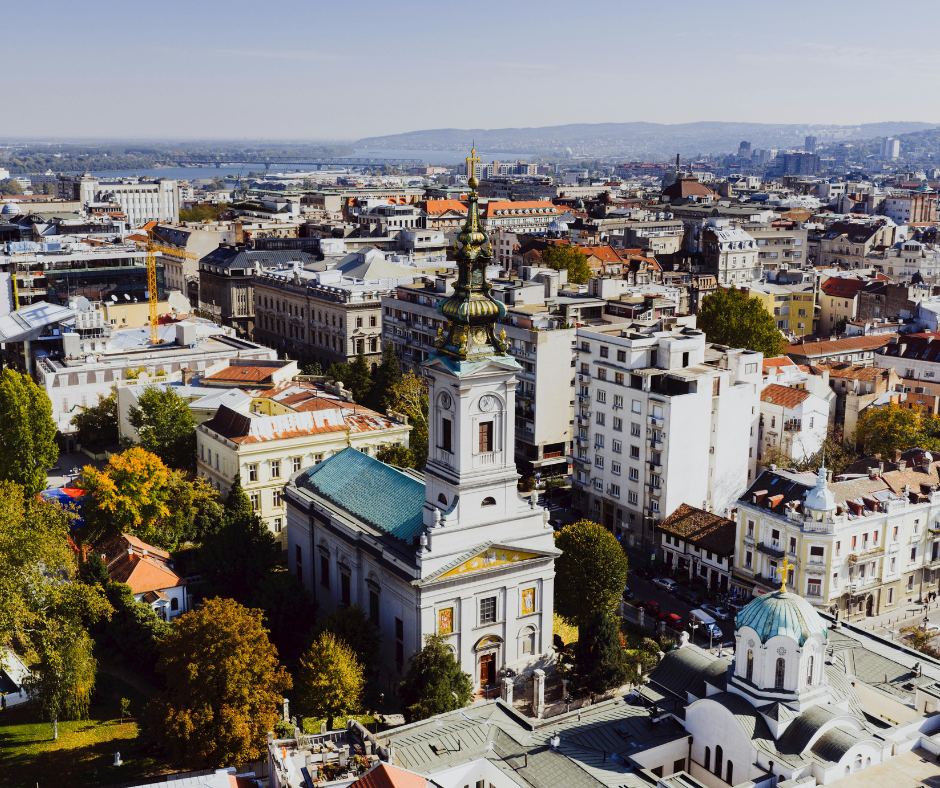
In Serbia, the Karakoncolos are said to lurk outside people’s homes, mimicking the voices of the person’s friends and family calling for help to draw them outside into the snow. After leaving the safety of their home, one of two things may happen. Some would be put into a trance-like state and made to wander alone into the dark forests whereas others would become the Karakoncolos’ personal taxi service, with it leaping on the victim’s back and riding them around, only releasing them when dawn breaks. The only way to stop the Karakoncolos is to invite him into your home. The creature would for some reason be compelled to copy every action that you as the host make. It is believed that if you set fire to a piece of silk or some thread, the Karakoncolos would, in turn, set fire to its own fur and run screaming from the home to look for water to douse itself with.
The creature was also said to punish adulterers over anyone else. According to legend, when a married person crept from their home and partner to meet their lover (thus committing adultery), the Karakoncolos was said to hide above the front door of the home in the dark, when the person returned home from the act, the creature would drop on their back and whip them and dig sharp nails into their skin. These people were then driven into the forest by the creature who, as mentioned above, would ride on their back, never letting them rest, until the break of dawn sent the creature back into hiding. This would continue every night until the adulterer confessed to their significant other. People in Serbia were so convinced that the 12 days leading up to Christmas were a time when demons would be stalking the settlements they called the period the “unbaptised days” and would stay in doors after dark for fear of being attacked.
Kallikantzaroi (Greece)
The Kallikantzaroi in Greece are similar (and often connected to) the Karakoncolos mentioned above from Serbia and Turkey. This time however, the legend is a bit different. The Kallikantzaroi were believed to be a group of demons, rather than an individual, that sat for most of the year beneath the ground, hacking and sawing at the great tree of life that was believed to run through the centre of the Earth to try and cut through it. Every year over the 12 days of Christmas, they are compelled to move above ground to cause chaos among humans before returning under the ground in January to find the tree fully healed, they would then have to start the process all over again. The chaos that they would create over the 12 days of Christmas were the usual fare, stealing food, destroying property and tricking people into following them, only for those people to disappear.
The descriptions of the demons differed from source to source but recurring themes were that they were hairy, with the legs of a horse like a centaur and the tusks of a boar. Most depictions of them have a certain male appendage on full display and, like a lot of Greek myths, there is a sexual undercurrent that runs through their stories. There were a number of ways to protect yourself and your home from the Kallikantzaroi, one of which was to leave a colander on your front doorstep as the demons would be compelled to stop and count all the holes. Unfortunately for the Kallikantzaroi, they could not say any number with three in them as this was a holy number to the Greeks and as a result, they would die if they said it but could not stop counting until they had counted all of the holes. Unable to count above 2, they would be stuck sitting and staring at the colander until the sun rose and they were forced back into hiding.
Another method of protecting the home was to throw loukoumades or lokma, a donut like leavened bread soaked with syrup or honey, onto the roof of your home alongside some smoked sausage. A specific song was then sung and apparently this forced the Kallikantzaroi to be distracted by the offering, eating it before forgetting their purpose above ground and returning to their lair under the earth. Some other methods included the burning of a yule log over the 12 days of Christmas in the fireplace which would stop them being able to climb down the chimney. Burning smelly old shoes in the fireplace was also thought to drive them away or placing a cross drawn in ash on the front door and burning incense.
According to legend, children born over the 12 days of Christmas were in danger of changing into a Kallikantzaroi and to stop this happening, the baby was to be bound in straw and garlic. Another slightly crueller method was to singe the ends of the baby’s fingers and toes with a candle flame to stop claws from growing! Ow! One of the supposed pre-Christian origins of the creatures comes from the ancient Greek festival of Dionysia which was to celebrate the god Dionysis (the god of wine and fertility and insanity). During this time festivals took place with orgies and the consumption of enormous quantities of wine which would have, at this time of year, just become ready to drink. Entertainers would dress as squat creatures with masks and costumes and move in unnatural ways around the revellers who, in their intoxicated state, would actually mistake them for demons. As a result these goblin-like creatures became synonymous with Dionysia which was celebrated between December and January and maybe they survived under Christianity in the form of the Kallikantzaroi.
The term kallikantzaros can be used in Greece to describe a range of small and creepy creatures similar to the word “goblin” in England.
Frau Perchta (Germany, Austria, Italy and Slovenia)
Frau Perchta, (also known as Berchta, Bertha, Frau Faste, Gode, Herke or Stampe) is a Goddess from the Alps in Europe. Originally she was a primary goddess in the area being worshipped by most people before Christianity. She was originally a goddess of weaving and spinning and other household chores but through the later Christian church, as with most religious figures that pre-date Christianity, she was vilified as an evil witch instead of a goddess. Perchta as a goddess was described as warm, pure, shining with bright light and kind to her followers. Her day of celebration lined up with the later Christian twelfth night of Christmas and it was customary on that date to stop weaving and spinning and host a feast. Her name is thought to mean “bright one” or “the bearer”. And the first mention of her in writing is in the 10th Century. Although her origins are thought to be a lot earlier, harking back to the Bronze Age.
In the traditional pre-christian beliefs, Perchta was also the guardian of the souls of children who had died, taking them to live in peace and comfort in her mountain home and teaching humans to make linen from flax. Leaving her food on Perchtantag, (now the twelfth night of Christmas) was less to do with avoiding punishment and more to do with receiving her blessing. People continued to do this far into the centuries of Christianity, much to the annoyance of the church. Martin Luther led a campaign of hate and several sermons against her, apparently incensed at the idea of local people worshipping her over his God. He describes her as “Here Fraw Hulde steps forward with her big snout, defies her god and calls Him a liar.”
Under Christianity, scared of the prospect of another deity taking the glory from their single god, she was changed to appear as a haggard old crone with one large, webbed foot and a cowl that haunted the woods around the twelfth night of Christmas. It was said that she would enter the homes of families to check to see if they had kept up with their chores, most importantly the spinning work necessary for the winter. If satisfied, she would leave a silver coin in a shoe or pot in the household. If unsatisfied, she was instead said to creep through each room of the house, slitting open the bellies of any sleeping occupants, removing their intestines and other innards and replacing them with straw, stones and broken glass!
Due to the dichotomy between the two sides of Perchta, the goddess and the witch, in more modern interpretations, she is said to appear as both. For those who have been good and followed her rules and eaten the right foods (fish, dumplings and porridge) on her feast day, she would appear as the bright goddess clad in brilliant white and astoundingly beautiful, but if you did not satisfy her requirements, instead she appeared as the old crone with her one oversized foot, horns, fangs, flaming eyes and fur.
In the 1200s, Rudolf, a Cistercian monk, wrote the following: “In the night of Christ’s Nativity they set the table for the Queen of Heaven, whom the people call Frau Holda, so that she might help them.” Much later, The Brothers Grimm wrote a fairy tale based on her called ‘Holle’ and Jacob Grimm would write about her on several occasions.
Today in Austria and Bavaria, there are processions in her name that are similar to the ones around Krampus (some believe the Krampus marches were influenced by the ones for Perchta). The procession goers are split into two groups, those who dress as Schönperchten, (Beautiful Perchta) in flowing white gowns with masks depicting a beautiful woman, and Schiachperchten (ugly Perchta) whose costumes are closer to Krampus in style, with fur, bells, terrifying masks and horns. Perchta is also sometimes portrayed with a following of minions. They are women called Perchten and will dance around the central figure and cause mischief among the audience. They wear terrifying wooden masks and fur with snapping jaws and horns. They were believed to scare away evil spirits and in 16th Century Austria, would go from home to home in the town to “drive the evil spirits from the homes”. In some depictions, Perchta is one of the figures who heads The Wild Hunt, an ancient pre-christian belief that gods and spirits would band together in winter to ride ghostly horses across the skies of frozen landscapes with giant spectral hounds running through the air alongside them. The echoing sounds of a spectral hunting horn being heard across the dark forests and mountains.
Turon (Poland)
The Turon is a Polish tradition based between Christmas and Lent. During this time, carolers will visit households across Poland singing songs and accompanied by the Turon (a person in costume). The Turon is a bull-like creature and the costume was often a cloak, sheep’s skin or shaggy black furs, with the person hidden inside. Protruding from the cloak was a stick and on the end was a bull’s head (often a real bull skull or a wooden one) covered in animal fur with gleaming silver horns, bulging eyes and nails for teeth. The jaw would flop and snap, similar to the costume we used in Norwich for Snap the Dragon! It is also similar to the Mari Lwyd in Welsh tradition.
Turon comes from ‘Tur’ which means ‘Auroch.’ Aurochs were large cows that were native to Europe, Britain and Asia until they were wiped out by humans in the 17th Century, becoming completely extinct. They were larger than domesticated cattle and often sported impressive horns that were several feet long. They were worshipped across Europe before Christianity came along and in Poland were associated with the sun. In Polish tradition, after the depths of winter and the solstice, the Turon was believed to bring a new sun to the world which would grow in strength until the summer solstice and then lose power throughout the autumn and into winter. The Turon is also a symbol of fertility for both humans and animals but also for the land in terms of farming and used as a symbol of both masculinity and strength.
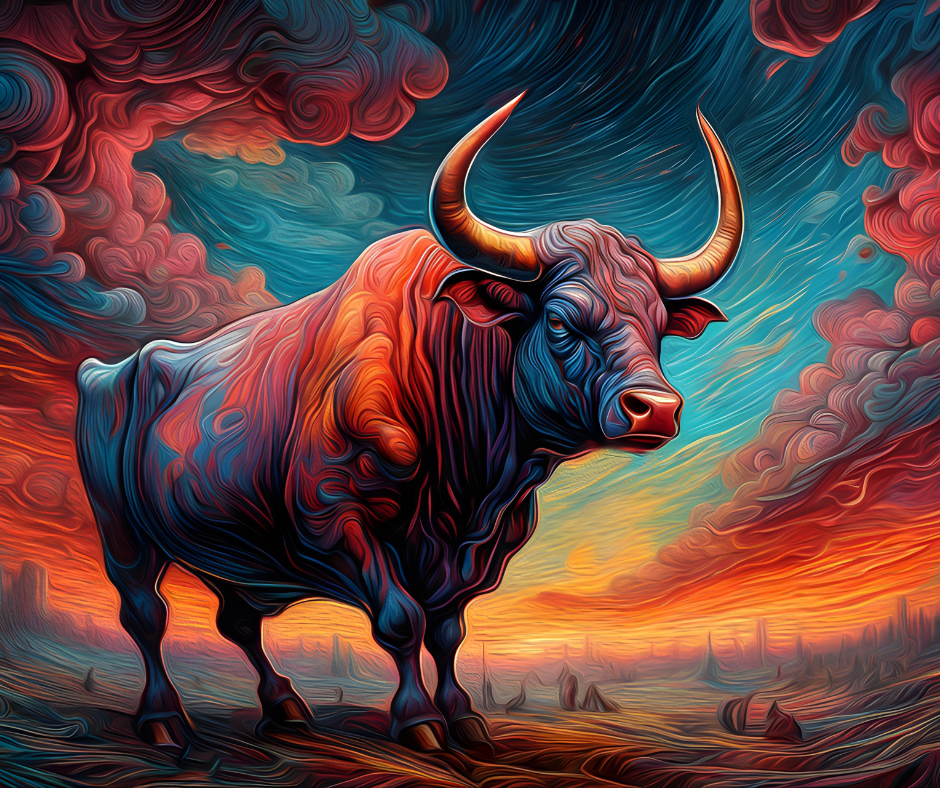
An encounter with the Turon usually involved a knock on the door which, when answered, would reveal the singing carolers. In the background, half hidden in the shadow would be the Turon’s large and imposing form and as the music picks up tempo it starts to dance, becoming more frantic as the music speeds up. It would then proceed to chase the inhabitants of the home. Children would be pounced on, women would be bumped with the jaw and men prodded with the horns (which was said to bring fertility!). Eventually, at the apex of the music, the Turon would collapse to the ground and lie still. The hosts would then “feed” the Turon a shot of vodka, at which point it would spring back to life and run from the home. The carolers would then thank the host and leave for the next home. This whole scene was meant to represent life, death and rebirth with the added bonus of alcohol.
Some variations of this ritual include, in Krakow, carolers carrying a large star to represent the Epiphany (6th January) and the Turon will tackle anyone to the ground who stares at the star for too long! In some areas of Poland, the hosts of the home have to sing a song to get Turon to leave that goes: “Idź, turoniu, do domu, nie zawadzaj nikomu, nie tuś się wychował, nie tu będziesz nocował.” Which loosely translated is: “Go now, Turoń, go home, Don’t you bother any more souls, Here’s not the place you live, This not the place you shall sleep” Unsurprisingly, the Turon’s behaviour tends to get more raucous as the evening goes on which is to be expected when the person wearing the costume is drinking a shot of vodka at every house!
Some modern Christian versions of the Turon justify it’s use as saying that the “beast” follows the carolers to scare away evil spirits and that way the carolers can deliver blessings to each household.
Père Fouettard: The Christmas Cannibal (France)
In the city of Nancy in the Lorraine region of France, they have St Nicholas parades similar to the Krampus ones in Germanic countries on December 6th. However, it isn’t a horned beast that accompanies St Nick in Nancy, it’s a cannibal named Père Fouettard who carries a cleaver and whip and chases the children. But why on earth is St Nick being followed by a mad cannibal? Well it’s a bit of a strange story involving medieval battles that comes from many elements blended together and some embellishment.
St Nicholas was actually The Bishop of Myra from present day Turkiye who died on December 6th 343CE. During his life he supposedly performed many miracles that showed his connection to God. After death, his body in the tomb was said to be secreting an oil with healing properties (that scientists now believe was just the water from the damp tomb forming condensation on his body… ew). In the 11th Century, merchants from Italy set out to retrieve his body and bring it back home. They were successful and his body was interred in a new tomb in Bari. Word spread of St Nicholas being in the area and during the first crusade, (1096-99) a Bishop from Lorraine raided his tomb and cut off the end of one of the saint’s fingers, bringing it back home and building a church around it St-Nicolas-De-Port and the saint became revered in the Lorraine region.
In 1476, Charles the Bold, a vicious conqueror who had been taking over large regions of France, laid siege to Nancy. Food supplies were cut off and the inhabitants were forced to live off of rats. Stories of cannibalism emerged as well because of the sheer desperation of the people. Seeing the suffering, Rene II, Duke of Lorraine, prayed over the severed finger in the church of St Nicholas and miraculously, shortly after, the small city fought back and won. The victory was attributed to St Nick and he became the patron saint of the region. In 1552, Holy Roman Emperor, Charles V, laid siege to the nearby city of Metz. During the siege, in an act of defiance, the people of the city made an effigy of Charles which they paraded through the city and in view of the besieging soldiers and it was carried by local tanners carrying their whips. They whipped the effigy and then burned it. After the siege, it became a yearly tradition to carry an effigy through the city and eventually burn in but over time, it became the effigy carrying the whip and, rather than being an image of Emperor Charles, it became known as Père Fouettard (Father Whipper.)
For some reason, this tradition then mixed with a local legend of a butcher named Pierre Lenoir. In this legend, Pierre Lenoir has three young children come to his butcher’s shop to pick up an order and the wicked man kills them, chops up their bodies with his cleaver and leaves them in a barrel of salt to cure for seven years. One day Pierre receives a knock on the door and is surprised to find a hungry St Nicholas on his doorstep, who the butcher quickly recognises. Realising that all he has to offer the holy man is human flesh, Pierre makes the excuse that he has no food but St Nick strolls past him and examines the barrel full of bits of children. With a look at Pierre, he places a finger on the barrel and the three children miraculously appear before them alive and unharmed, feeling as though they have awoken from a deep slumber and with no memory of what happened (conveniently sidestepping some egregious PTSD.)
For some reason this story merged with Pere Fouettard and now on every Dec 6th, people gather to watch the story above played out in a light show and reenacted by actors dressed as St Nick and the cannibal, whip wielding butcher. Upon the resurrection of the children, the Christmas lights in the city come on and the butcher is transformed into Père Fouettard to forever follow St Nick and dole out punishment to bad children. The actor becomes part of the parade, whipping the air near groups of children and hurling coal and potatoes into the crowd.
Père is often depicted as a hunched man with long greasy black hair and a straggly beard. He is dressed in ragged sack cloth and a large belt, in which his rusted and bloody cleaver can be seen and carries a long whip with him. Like Krampus, it is believed that the story evolved in this way to try and keep children from misbehaving, lest the figure of Père come and find them in the night to be carried away to be whipped and then eaten.
Mari Lwyd (Wales)
When you think “Christmas,” do you think of rap battling with a ghostly horse skull while people adorned with bells dance and sing around you? No? Well if you are from Wales you might, thanks to the tradition of the Mari Lwyd! The Mari Lwyd can be translated to either the “grey mare” or “grey mary” depending on which origin of the tradition you believe. Similar to the Turon above, wassailers (similar to morris or molly dancers) go from home to home accompanied by the sinister form of the Mari Lwyd. The costume involved a white sheet over the wearer who holds a stick with a horse’s skull at the top, appearing as though the skull is wearing the sheet like a cloak. The skull often has glowing lights or baubles in the eye sockets so they appear bulging and menacing and the “mane” is often made up of either colourful ribbons or holly and ivy. The jaw hangs loose and snaps when the creature moves.
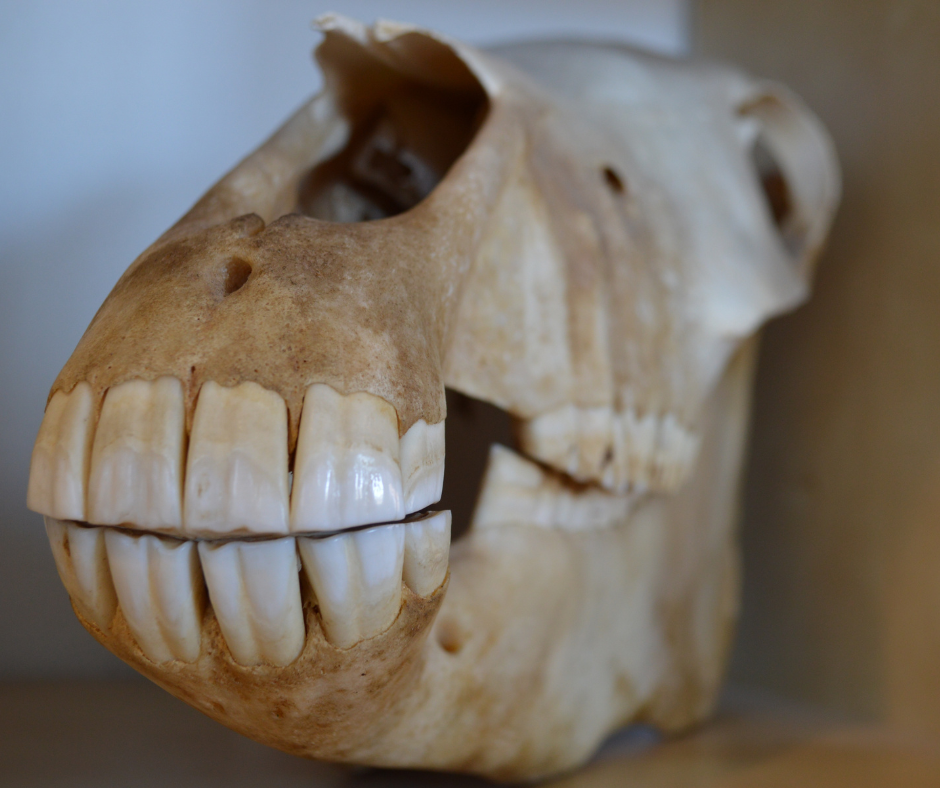
Between Christmas and New Year, the horse skull will tap menacingly on either the door or windows of the target home and then when the inhabitants come to the door, they are met with the sight of the Mari Lwyd looming over them and people in costume all around singing and dancing. Traditionally the inhabitants would then have to engage in a rhyming battle or song with the Mari Lwyd until one side relents. If the Mari Lwyd is the winner, then the entire procession enters the home where the Mari Lwyd might chase the inhabitants and food and drink are given to the entire procession. The Mari Lwyd then moves on to the next home.
The origin of the Mari Lwyd is hotly debated with little mention of its existence before the 19th Century. Some scholars believe it to be pre-Christian with Celtic pagan beliefs around white horses and their connection to the underworld, believing they could ferry souls between the lands of the living and dead. Others who refer to the Mari Lwyd as “grey mary” believe it to be linked to the story of a pregnant horse being ousted from the barn that Mary inhabits to give birth to Jesus in Christian mythology. The horse wanders the land looking for a place to have its foal but dies in the process and carries on the infinite march in the afterlife.
In some communities in Wales, the building of the Mari Lwyd costume was a communal event, with many people contributing to the decoration. It made the event of the creature going around all the more special as everyone was excited to see their work as a finished product!
Hans Trapp (The French/German Demon Scarecrow.)
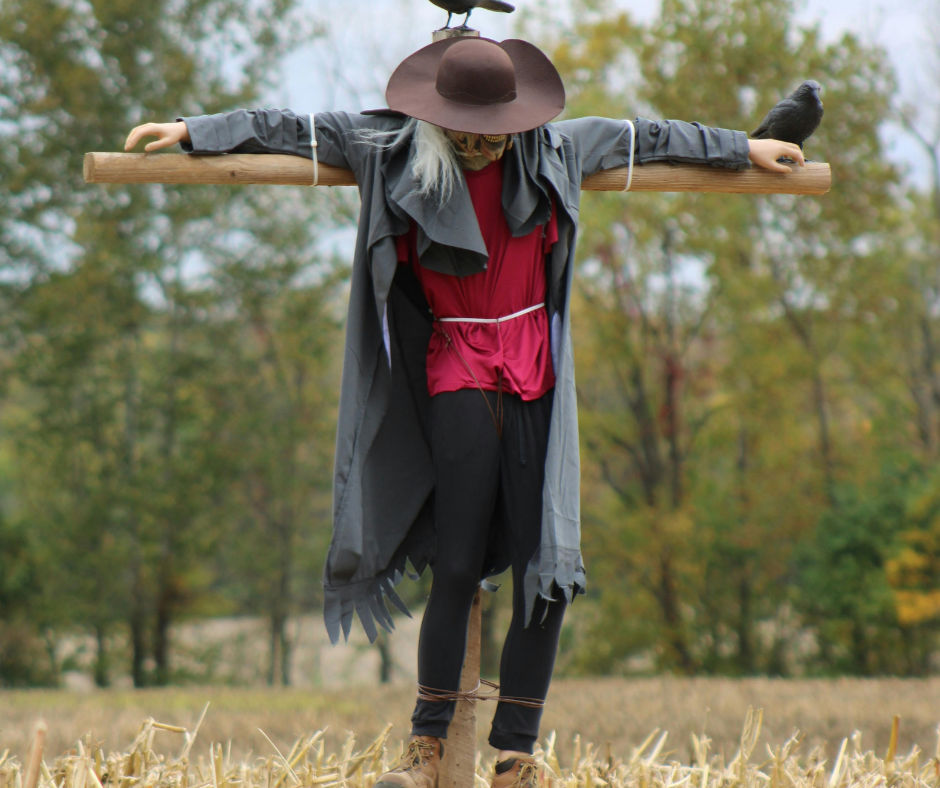
Around the depths of winter, in the fields and woods of Germany and France, according to local legend, there is a demonic scarecrow hiding from passers by, waiting for a child to seize, in its twig-like claws. The name of the scarecrow? Hans Trapp. What’s more, he is based on a real person.
Hans Von Trotha, the real historical figure behind the Hans Trapp legend was a French/German Knight who lived near the Alsace region of France. He was born somewhere between the 1440s and 1450s and was, in 1480, awarded two castles by the elector of the region (Berwartstein Castle and Grafendahn Castle). Unfortunately for Hans, a local Abbot in the region believed that he had legitimate claim to the lands and argued that Hans, as a result, could not be the legitimate owner of the lands. This resulted in actual violence and open warfare between the two and, when the Holy Roman Emperor failed to stop the conflict, Hans was summoned to the Papal Court in Rome to answer to the Pope, but refused, writing a letter to the Pope instead to accuse the Borgia religious leader of immorality and corruption (which he wasn’t wrong about). As a result, Hans was excommunicated from the church which was recognised by the Holy Roman Empire. Hans died two years later of natural causes.
Over the centuries, the story of Hans Von Trotha became twisted into the legend of Hans Trapp. According to the legend, after his excommunication (and a few cases of good old Satanism and Black Magic, because what’s a legend without a bit of that?). Hans was run out of his home by the angry populace to scrape a living off the land, isolated in the nearby forest. He became twisted and insane through isolation, resentment and starvation and was determined to get revenge on the people. Disguising himself as a scarecrow with a ragged hat, overcoat, cloak and with straw and twigs to pad it, he took to the surrounding area to rob people and commit acts of violence. One day, in a delusional state through hunger, Hans decided to stand in a field in his scarecrow disguise to hide in plain sight from the locals with a homemade spear. He waited until an unwitting, young farmhand wandered into striking distance before running him through with the spear and dragging his body into the forest. He cooked the boy’s body and was about to take his first bite of his flesh, when a bolt of lightning struck from above and killed him. From that moment on, he reanimated, now trapped in the twisted form of a scarecrow to haunt the lands around Christmas, searching for a child to eat.
In some parts of the Alsace region, on St Nicholas’ Day on 6th December, it is a depiction of Hans Trapp that follows St Nick around scaring children as the “bogeyman” figure as seen with many of these dark characters associated with Christmas.
Sleep well, folks!